Showing posts with label News. Show all posts

Wednesday, May 24, 2023

Alvarezsaurid Paleobiology, an Update

It's been a few years since I wrote a post about alvarezsaurids on this blog, in which I discussed the interpretation of these dinosaurs as specialized insectivores that used their unusual forelimbs to dig for social insects, and why I happened to think that that was the most convincing model for their lifestyle and ecology. Back then, I had little expectation that there would be much alvarezsaurid news in the immediate future, so it was a pleasant surprise to see an alvarezsaurid featured prominently and portrayed as a termite-eating specialist in the high-profile documentary series Prehistoric Planet last year. Not only that, but many studies on alvarezsaurids have been published in the intervening time. Has this newfound information updated and modified my thoughts on how alvarezsaurids lived? Let's take a look.

The New Alvarezsaurs on the Block
To start off, several new alvarezsaurid taxa were named in recent years, including Trierarchuncus from the Hell Creek Formation of the western United States (Fowler et al., 2020; Freimuth and Wilson, 2021), Dzharaonyx from the Bissekty Formation of Uzbekistan (Averianov and Sues, 2021), and Khulsanurus and Ondogurvel from the Barun Goyot Formation of Mongolia (Averianov and Lopatin, 2022a; Averianov and Lopatin, 2022b). The braincase of an indeterminate alvarezsaurid from the Qiupa Formation of China was also described (Agnolín et al., 2022), and the anatomy of Parvicursor was reevaluated in detail (Averianov and Lopatin, 2021).

Nearly complete thumb claw of Trierarchuncus, from Fowler et al. (2020).

In general, most of these new findings don't substantially change what I previously talked about, but it's great to have more alvarezsaur anatomy to work with. Trierarchuncus deserves mention, however, in that one of the specimens referred to it represents the most completely preserved alvarezsaurid thumb claw to date. I noted in my previous post on alvarezsaurs that complete alvarezsaurid thumb claws are hard to come by, making it difficult to compare their shape to the claws of modern animals. This Trierarchuncus specimen reveals that at least some alvarezsaurid thumb claws were much more sharply curved than formerly expected, in line with their hypothesized function in hook-and-pull digging.

Reconstructed curvature of the thumb claw of Mononykus based on that of Trierarchuncus, from Fowler et al. (2020).

In addition, comparing the claws of differently sized Trierarchuncus individuals suggests that as alvarezsaurids aged, the bony core of their thumb claws became wider and gained a roughened texture (possibly induced by stress) near where the claw attached to the rest of the thumb, consistent with the use of the claws in strenuous activity (Fowler et al., 2020; Freimuth and Wilson, 2021).

Turning Tail
As I mentioned in my previous post, a long tail for balance can be a helpful adaptation to a hook-and-pull digger. Although alvarezsaurids were long tailed, however, a long tail is typical of diapsid reptiles, so this in itself was not necessarily a specific adaptation to digging in alvarezsaurids. That being said, alvarezsaurids did have a few unusual features of the tail that may shed light on their lifestyle, and Meso et al. (2021) provided a detailed description and functional interpretation of alvarezsaurid tail anatomy.

For one, alvarezsaurids were long-tailed even for theropods; relative to their body size, they probably had among the longest tails of any maniraptoran. For another, many features of their tail vertebrae suggest that their tails were more flexible from side to side than those of most other theropods. Probably to compensate for this increase in length and mobility, the muscles along the top of the tail that would have helped hold it aloft appear to have been well developed in alvarezsaurids. Also abnormal among theropods is the fact that alvarezsaurid tail vertebrae were procoelous: the back end of each vertebra fit into a socket in the front end of the vertebra behind it. (In typical theropods, the joint surfaces of the tail vertebrae tend to be flat or nearly so.) This may have been another way of reinforcing the tail, giving it further mobility without a correspondingly high risk of dislocating the vertebrae.

Reconstructed tail musculature of an early alvarezsaur (A), a patagonykine alvarezsaurid (B), and a parvicursorine alvarezsaurid (C), from Meso et al. (2021).

Meso et al. note that overall configuration of the alvarezsaurid tail exhibits similarities to that of the extant aardvark (Orycteropus afer), which also has large muscles running along the top of a long (by mammal standards), strong, and flexible tail. In aardvarks, the tail probably serves an important role as a brace while digging (Endo et al., 2013). This could have also been the case in alvarezsaurids, but Meso et al. suggest that their characteristic tail morphology might have provided another adaptive benefit. As I discussed previously, one of the many strange features seen in alvarezsaurids is their apparent specialization towards running, and it is likely that they relied on this as a means to escape predation. Meso et al. posit that their increased tail flexibility gave alvarezsaurids a smaller turning radius, granting them a further advantage in avoiding pursuers.

Diagram showing how the flexible tail of alvarezsaurids might have helped them avoid predators (with a successful escape making use of a reduced turning radius shown in B), from Meso et al. (2021).

Creatures of the Night
How an animal perceives the world naturally has a major influence on how it interacts with its environment and the other organisms in it, and Choiniere et al. (2021) offered some considerable insight into this aspect of alvarezsaurid biology. Their study was not focused solely on alvarezsaurs, but compared the proportions of the scleral ring (a bony ring embedded in the eyeball of many vertebrates, though not in mammals) and the anatomy of the inner ear in a wide variety of Mesozoic dinosaurs to those of extant birds and other reptiles. However, the results they found for the alvarezsaurid Shuvuuia (one of the few alvarezsaurs in which both of these elements are well preserved) were especially intriguing.

The anatomy of both the scleral ring and inner ear in Shuvuuia strongly suggests that it was primarily active at night. What's more, its inner ear exhibits an extreme morphology similar to that of the extant western barn owl (Tyto alba), a nocturnal predator that famously uses sensitive hearing to detect prey. It's important to emphasize here (as I've seen some popular retellings of this study misunderstand this) that the observed similarities between the inner ear of Shuvuuia and barn owls are due to the structure of the ear itself, not related to ear asymmetry.

Barn owls and their close relatives in the group Tytonidae are one lineage of owls that have evolved asymmetrical ears, which help them pinpoint the location of their prey. Ear asymmetry in owls can take several different forms, but in tytonids, the left ear opening is generally positioned higher than the right. However, this asymmetry is not reflected in their skull (Norberg, 2002). There are owls (such as those in the genus Aegolius) that do have asymmetrical skulls, but tytonids are not among them. Choiniere et al. also found no evidence of skull asymmetry in Shuvuuia. Might alvarezsaurids have instead had asymmetry in the soft tissue morphology of their ears, like barn owls? That seems like a possibility, but we may not be able to determine one way or another from their bony anatomy.

The back of the skull and inner ear of Shuvuuia (A–C) compared to that of a western barn owl (D–F), from Choiniere et al. (2021).

As noted by Choiniere et al., a combination of a nocturnal lifestyle with specialized hearing is widespread in tetrapods, especially in mammals, so the fact that Shuvuuia exhibits evidence of these traits does not by itself indicate that alvarezsaurids were myrmecophagous (feeding mostly on social insects). However, there is indeed an extant myrmecophage that often forages at night primarily by acoustic cues, the bat-eared fox (Otocyon megalotis) (Renda and le Roux, 2017). Therefore, I consider these new findings on alvarezsaurid sensory biology very much compatible with the hypothesis that they were myrmecophages. (In fact, I was aware of Choiniere et al.'s research before its formal publication, and deliberately inserted a reference to the bat-eared fox into my last alvarezsaur post as oblique foreshadowing.)

A bat-eared fox, photographed by Yathin S Krishnappa, under CC BY-SA 3.0. This species feeds mainly on termites, which it locates using its sensitive hearing. Perhaps alvarezsaurids did the same?

The Incredible Shrinking Alvarezsaurs
My previous post also mentioned small body size as as a curious evolutionary trend in later alvarezsaurids, and Qin et al. (2021) investigated this phenomenon in more detail. First of all, by inferring growth patterns based on the bone microstructure of individual alvarezsaur specimens, they confirmed that some alvarezsaurids, such as Albinykus and Xixianykus, had adult body masses of only about 1 kg or less. (It's worth noting though that one of the smallest known alvarezsaurids, the type specimen of Parvicursor, was subsequently reinterpreted as a juvenile instead of an adult by Averianov and Lopatin, 2021.)

Interestingly, Qin et al. indicated that Albinykus and Xixianykus had very different growth strategies from one another despite being of similar sizes. Whereas the type specimen of Albinykus had essentially stopped growing by the time it was three years old, the type specimen of Xixianykus grew more slowly but across a longer period of time, living for over a decade. This diversity in alvarezsaurid growth patterns was also observed more recently by D'Emic et al. (2023).

When Qin et al. plotted alvarezsaur body size across the evolutionary history of these dinosaurs, they found that not only were later alvarezsaurids smaller overall than their ancestors, but their small body size evolved very quickly in the early Late Cretaceous, about 90 million years ago. What may have caused this sudden miniaturization? Qin et al. point out that this event would have shortly followed the estimated diversification of both ants and termites during the Cretaceous, which may have created the opportunity for dedicated myrmecophagy to evolve in alvarezsaurs. Specialized insectivory as a driver of alvarezsaurid size reduction would also align with the median body size of insectivorous land vertebrates being consistently smaller than those with other dietary habits, a pattern that has been shown to hold true across different groups and biomes (Cooke et al., 2022).

Evolution of alvarezsaur body size over time, from Qin et al. (2021).

When All You Have is a Pick...
As I hope I reviewed thoroughly in my last alvarezsaur post, there are many features of alvarezsaurid forelimbs that suggest they functioned in digging. However, just how effective their claws would have been at this task had not been quantitatively tested until recently. Qin et al. (2023) applied finite element analysis (FEA) to alvarezsaur hand claws to compare how they performed under different scenarios. (This study also looked at the claws of therizinosaurs, but this post is not about them.) 

For each claw studied, three scenarios were tested: piercing (puncturing a substrate), pulling (using the underside of the claw to pull an object downward), and scratching (dragging the tip of the claw through a substrate), with the last being considered analogous to digging. When compared to a variety of mammals representing a range of claw morphologies and functions, the claws of alvarezsaurids were found to behave akin to those of pangolins: experiencing relatively low stress and similar stress distributions across all three scenarios. On the surface, it may sound surprising that such seemingly specialized claws would be well suited to multiple tasks in this way, but as Qin et al. point out, this makes a lot of sense if alvarezsaurids were diggers. Hook-and-pull digging in particular requires piercing, pulling, and scratching motions, so it would be potentially advantageous for animals adapted for this behavior to excel at all three.

Furthermore, Qin et al. found that the claws of alvarezsaurids performed better at scratching than those of earlier, non-alvarezsaurid alvarezsaurs, which had hands more broadly similar to those of typical theropods. This may suggest that increased digging specializations were specifically being selected for during alvarezsaur evolution.
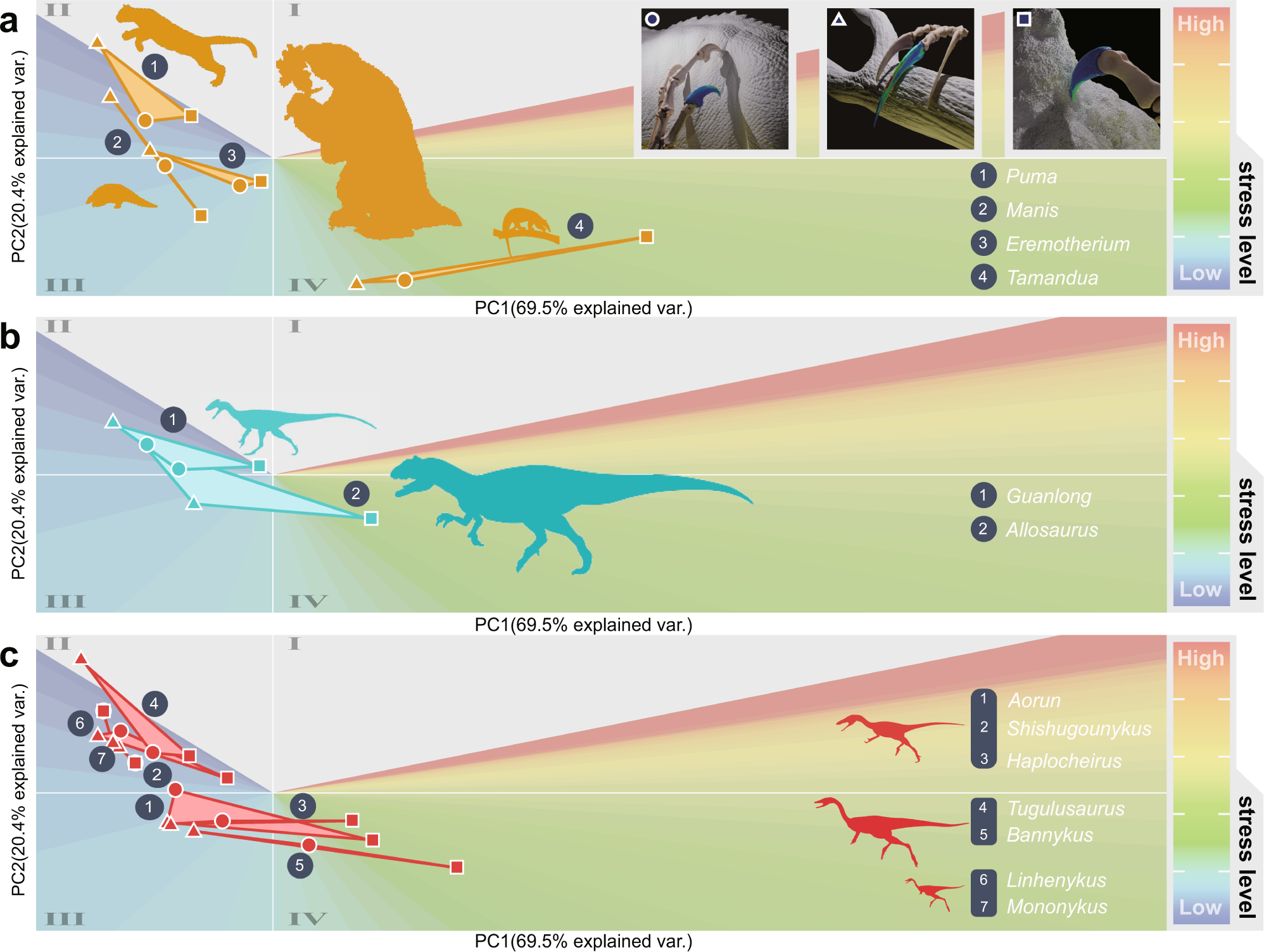
Claw performance under different simulated scenarios in a selection of mammals (a), non-alvarezsaurian theropods (b), and alvarezsaurs (c), from Qin et al. (2023). What surprises me the most is that the fields for the pangolin and the tamandua plot so far apart, especially considering that, according to the supplementary material, the pangolin species studied was the tree pangolin (Phataginus ["Manis"] tricuspis), which, like tamanduas, spends a lot of time in trees. Maybe there is more functional variation among these superficially similar myrmecophages than commonly appreciated.

It makes me happy to see so much new alvarezsaur research being done lately, and new advances have been made in understanding the digging abilities of extinct mammals as well (Nakai and Fujiwara, 2023), which could perhaps be applied to alvarezsaurs in the future. I'm certainly pleased that essentially all of these new alvarezsaur studies either reinforce or are consistent with the hypothesis that alvarezsaurids were myrmecophages. However, what excites me most of all is that I might have had a very small hand in bringing some of this science to fruition. I have it on good authority from Qin Zichuan that he and his colleagues' study on alvarezsaurid claw biomechanics was directly inspired by my previous alvarezsaur post, in which I idly suggested some potential directions for future investigations into alvarezsaurid ecology. For my humble blog post, having stimulated actual scientific research on these remarkable dinosaurs is just about the highest honor that I can conceive of.

Excerpt from the acknowledgements of Qin et al. (2023).

References

Wednesday, March 18, 2020

Catch a Falling Star: Meet Asteriornis!

Today marks the publication of a very exciting study that I have been waiting to talk about for a long time. Led by my supervisor Daniel Field, we describe a new species of fossil bird from the Late Cretaceous of Europe, and it's a doozy.

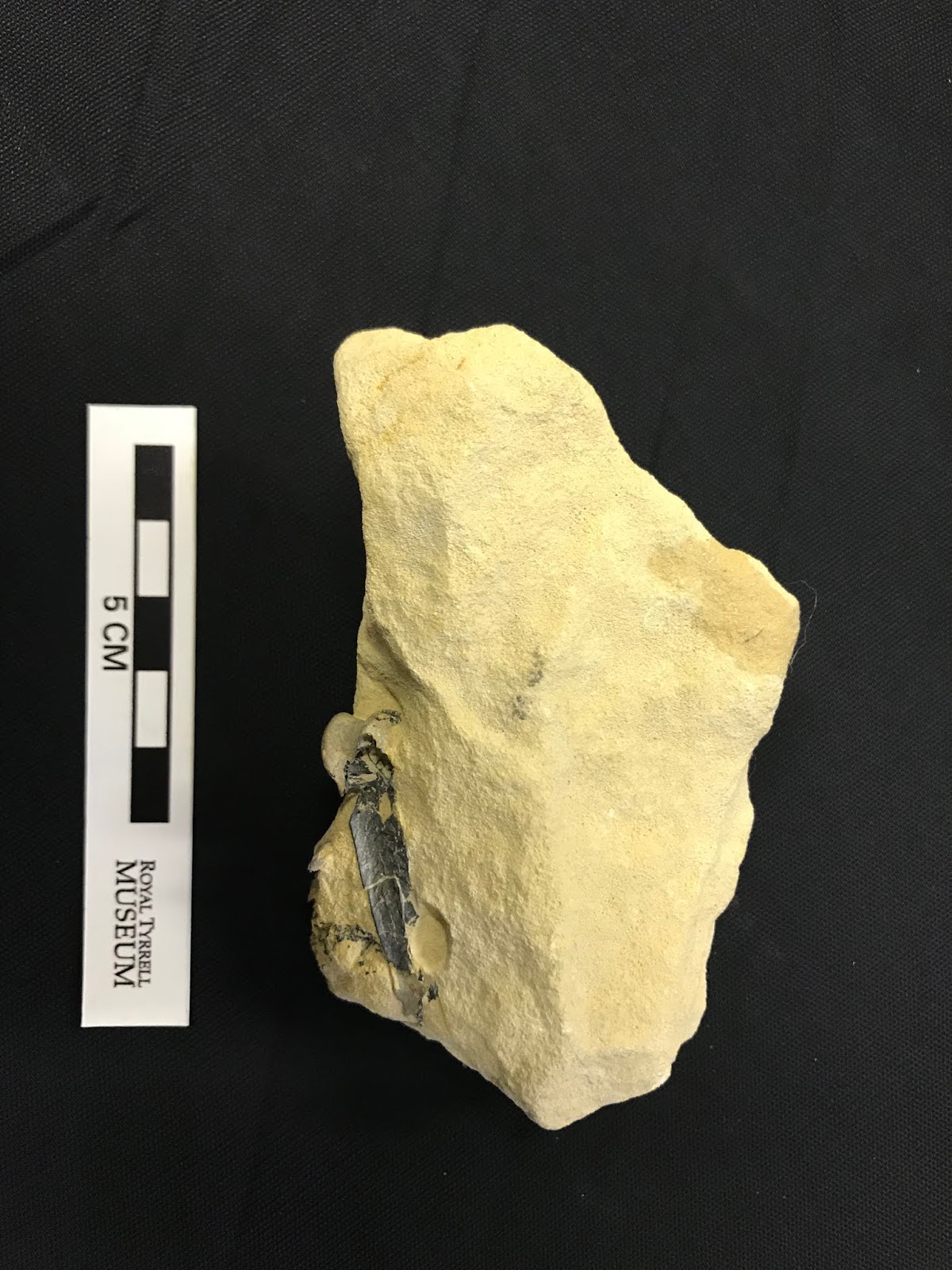
Doesn't look like much, does it? But read on... (Photo by Daniel Field.)

Among the most highly sought-after discoveries in the avian fossil record are specimens of the oldest modern-type birds. Although we now know of numerous bird-like dinosaur fossils that document the evolutionary acquisition of many notable avian features, the origin of the modern bird group (Neornithes) itself remains cryptic.

Molecular clock analyses, which use molecular sequences from different organisms and estimated mutation rates to infer the age of divergence between different lineages, place the origin of modern-type birds in the Cretaceous. For reasons that I won't go into here (lest I wander too far off topic), timing the origin of modern birds is a subject fraught with controversy. However, all recent molecular clock analyses of modern-type birds agree in placing the divergences between the three main extant avian lineages—paleognaths (ostriches, emus, and their kin), galloanserans (chickens, ducks, and their kin), and neoavians (all other living birds)—by the end of the Cretaceous. Despite this, fossil evidence for these hypothetical modern-type birds in the Cretaceous has been limited.

There have been a number of specimens purported to represent Cretaceous modern-type birds, but most of them are so fragmentary that their supposed affinities are best taken with an unhealthy serving of salt. By far the best represented (and probably the most convincing) example of a Mesozoic modern-type bird is Vegavis iaai, known from two partial skeletons from the Late Cretaceous of Antarctica. However, the skull of Vegavis is largely unknown. Furthermore, how Vegavis relates to living birds is not well understood. Although it was originally described as a close relative of modern ducks and geese, this has been questioned by some recent studies.

By the end of the Cretaceous (66 million years ago), modern-type birds had likely diverged into at least three major lineages.

In 2018, Daniel arranged a loan of a fossil bird specimen with the Maastricht Natural History Museum (Natuurhistorisch Museum Maastricht or NHMM) in the Netherlands. My labmate Juan Benito Moreno traveled to Maastricht to borrow the specimen from curator and coauthor John Jagt, who also provided us with information about the geologic setting in which the fossil had been discovered.

The specimen had been recovered from a quarry in Belgium, hailing from the Valkenburg Member of the Maastricht Formation. This site dates to 66.8-66.7 million years old, very close to the end of the Late Cretaceous (66 million years ago). Another fossil from this site had been previously described briefly as an Ichthyornis-like bird. Seeing as it preserves at least one tooth, this previously-studied specimen was certainly not a modern-type bird.

The new specimen is a very unassuming fossil, composed of four blocks of rock matrix that together take up about as much space as a deck of playing cards. In fact, the only reason we paid any attention to it was because one of the blocks (pictured at the beginning of this post) had an avian leg bone exposed on its surface. Bits and pieces of other bones were visible as well, but nothing that looked particularly exciting at a glance. Little did we know what we would find when we took a look inside.

To visualize the fossil material still hidden inside the rock, Daniel and Juan CT-scanned the specimen at the Cambridge Biotomography Centre. Shortly after they'd done so, Juan sent me a photo of what they saw inside the aforementioned block.

Holy fucking shit.

It was the nearly complete skull of a modern-type bird! Although it was distinct from any other bird skull known, we immediately noticed similarities with those of extant galloanserans. For reasons that I will explain near the end of this post, we eventually decided to give this bird the scientific name Asteriornis maastrichtensis. However, while we were in the process of studying the specimen, we called it by the nickname "Wonderchicken", for its suspected galloanseran affinities.

Due to the delicate nature of the fossil, we chose not to physically separate the bones from the surrounding rock. (For some perspective, the preserved length of that skull is less than 5 cm long, shorter than my thumb.) Instead, we spent much of 2019 digitally isolating each of the bones in the CT scans. In addition to the amazing skull, we were able to identify several wing and leg bones contained within the blocks, even though these bones were broken or incomplete.

Once we had digitally extracted the bones, we could look at them more thoroughly and make detailed comparisons with the anatomy of other birds. Here our coauthor Dan Ksepka brought his extensive experience in studying bird skeletons to bear, and we were able to confirm the presence of several features in Asteriornis that are also seen in most galloanserans. These include long, curved retroarticular processes (projections at the back of the lower jaws), narrow, upward-pointing medial processes (projections on the inside of the lower jaws), and a shallow groove along the top of the skull. In addition, the quadrate (a bone at the back of the upper jaw) of Asteriornis closely resembles that of the Paleogene waterfowl Presbyornis.

The skull of Asteriornis in multiple views. Juan spent a copious amount of time preparing the anatomical figures in our paper. This image is Extended Data Fig. 2 from Field et al. (2020).

To test our phylogenetic hypothesis and to give us a better handle on exactly what type of galloanseran Asteriornis might have been, we added Asteriornis to a modified version of the phylogenetic dataset used by Tambussi et al. (2019) in their description of the Paleocene waterfowl Conflicto. (As an aside, the last sentence in my blog post about Conflicto was intended to be an oblique reference to Asteriornis.) This dataset includes a range of extant and extinct galloanserans, and originated from Worthy et al. (2016).

The phylogenetics section of our study was my primary contribution to the description of Asteriornis. I implemented many of the changes to the dataset that we'd agreed to make, set up the phylogenetic analyses, and wrote up our phylogenetic methods and results. (Readers interested in those details are encouraged to check out our 136-page supplementary material. It contains more than just phylogenetics, but my input does take up a pretty big chunk!)

Ultimately, one of our analyses found Asteriornis to have most likely been a stem-galloanseran (more closely related to galloanserans than to any other living group, but not a member of either the landfowl or the waterfowl lineages). However, some of our other analyses found it best supported as an early stem-landfowl (more closely related to chickens than to ducks, but outside of the group uniting all modern landfowl), and we found that an early stem-waterfowl position was potentially plausible as well. This is not terribly surprising; species that retain many ancestral traits of a given group are often very difficult to confidently place on one specific branch or another. Yet regardless of exactly where Asteriornis goes in galloanseran phylogeny, no other fossil has been identified as a better representative for what the ancestral galloanseran probably looked like.

Landfowl and waterfowl have not always been widely accepted to be close relatives. Some previous authors have even provided long lists of anatomical differences between these two groups while expressing skepticism of such a relationship. Although the close ties between landfowl and waterfowl are now strongly supported by more recent studies, the distinct anatomy between the two groups has made it difficult to infer what their ancestral form was like. Asteriornis exhibits a mixture of traits from both lineages. Like landfowl, the bones in its snout are only weakly joined to each other and there is no obvious hinge at the base of its upper beak. On the other hand, its rounded, unhooked bill tip is more commonly found in waterfowl, as are the forward-pointing bony projection behind each eye socket and the hourglass-shaped depression on the top of its skull.

The skull of Asteriornis (with particular focus on the quadrate bone) compared to those of other galloanserans, including an Australian brushturkey (Alectura lathami), an... actual turkey (Meleagris gallopavo), the Eocene waterfowl Presbyornis, the Paleocene waterfowl Conflicto, a southern screamer (Chauna torquata), and a mallard (Anas platyrhynchos). This image is Extended Data Fig. 4 from Field et al. (2020).

We recovered a few additional phylogenetic results that I found especially interesting. First of all, none of our analyses found a particularly close relationship between Vegavis and waterfowl, supporting recent studies that have raised questions about its affinities. In fact, one of our analyses even found it outside of modern-type birds, though support for this result was very weak (and we are pretty skeptical of it). Secondly, in some (but not all) of our analyses, we recovered the extinct, long-legged presbyornithids as stem-waterfowl instead of their more traditional position as extinct members of the modern waterfowl group, similar to the findings of Tambussi et al. (2019). Having seen the similarities between Asteriornis and Presbyornis, I personally feel quite amenable towards the possibility that presbyornithids were stem-waterfowl.

We were also interested in adding two species of pelagornithids to our phylogenetic analyses. These large, extinct seabirds with tooth-like projections in their beaks have been suggested to have been aberrant galloanserans or close relatives thereof, but had not been included in previous versions of the dataset we used. However, our analyses did not find any consistent position for them. Resolving their evolutionary relationships will probably require a detailed study for another time.

The results of one of our phylogenetic analyses. This one recovered Asteriornis as a stem-galloanseran. This image is modified from Extended Data Fig. 9 from Field et al. (2020), and the restorations of Asteriornis were painted by Phillip Krzeminski.

Given that Asteriornis lived near the end of the Cretaceous, it provides us with a potential test of previous ideas about Cretaceous modern-type birds. Recent studies have predicted that the modern-type birds at the end of the Cretaceous were likely small-bodied, ground-dwelling animals, and that these factors may have been critical to their survival across the Cretaceous-Paleogene (K-Pg) mass extinction. To determine the body size of Asteriornis, Daniel used equations for estimating avian body mass from the width of their limb bones, and calculated its body mass at less than 400 g. That's much smaller than the average domestic duck or chicken, falling within the size range of a teal or partridge: relatively small by galloanseran standards.

As for the preferred habitat of Asteriornis, the preserved limb bones in our specimen are mostly incomplete, but enough is present to show that the hindlimbs of Asteriornis were relatively long and slender, well within the expected proportions for a ground-dwelling bird. This, along with the nearshore marine rocks that the specimen was preserved in, may even suggest that it mainly lived and foraged on the beach. Interestingly, the idea that all modern birds evolved from shore-dwelling ancestors has been put forth by other paleontologists in the past. Our current understanding of avian evolution does not support the notion that the group of living birds popularly known as "shorebirds" (Charadriiformes) gave rise to other modern birds, but Asteriornis suggests that a shorebird-like ancestral ecology may well be plausible for at least some modern bird groups.

Finding a single species of modern-type bird from near the end of the Cretaceous that fits these predictions certainly does not demonstrate that these features were widespread in end-Cretaceous modern-type birds, nor that they contributed to avian survival across the K-Pg. However, it is at least consistent with these hypotheses. Here's hoping more well-preserved modern-type bird specimens from Late Cretaceous rocks will be found that can further inform us about this subject!

Wonderful restoration of Asteriornis in what was likely its natural habitat, by Phillip Krzeminski. Two Ichthyornis-like birds squabble over a mosasaur carcass in the background.

One final takeaway from our study that I would like to highlight pertains to where Asteriornis was discovered. Some researchers have proposed that modern-type birds most likely originated in the Southern Hemisphere, largely based on the distribution of bird groups today and seemingly corroborated by the discovery of Vegavis and similar birds from the Cretaceous of Antarctica. Being from Europe, however, Asteriornis shows that modern-type birds were present in the Northern Hemisphere during the Late Cretaceous as well. This does not necessarily indicate that modern-type birds instead arose in the north, but it does warn us that the available data does not unambiguously point to a southern origin.

I promised that I would explain why we named Asteriornis the way we did. The species name, maastrichtensis, naturally reflects the Maastricht Formation in which the fossil had been found. Selecting a genus name, however, was a source of internal debate within our team for some time, until Dan Ksepka, in a stroke of genius, came up with "Asteriornis". This name translates to "Asteria's bird", after the Titaness Asteria from Greek mythology. Asteria relates to our fossil bird in three different ways: she was the goddess of falling stars (referencing the K-Pg asteroid impact that would occur shortly after the time that Asteriornis was alive), in mythology she transformed into a quail (referencing the galloanseran affinities of Asteriornis), and she threw herself into the sea to escape an amorous Zeus (referencing the preservation of Asteriornis in marine rocks).

Fossils from the Maastricht Formation have been collected and studied for over 200 years. That a remarkable find like Asteriornis had gone undiscovered for so long is testament to the fact that even well-excavated fossil sites can continue to surprise us. As for Asteriornis itself, there is still much left to learn about our Wonderchicken and we are excited to continue studying it.

Also... yeah, I suppose I've helped describe a new Mesozoic dinosaur in Nature now.

Reference: Field, D.J., J. Benito, A. Chen, J.W.M. Jagt, and D.T. Ksepka. 2020. Late Cretaceous neornithine from Europe illuminates the origins of crown birds. Nature 579: 397-401. doi: 10.1038/s41586-020-2096-0

Sunday, December 15, 2019

What Good is Less Than Half a Beak?

One of the many distinctive features of modern birds is their complete lack of teeth, their jaws instead being sheathed in a keratinous beak. Modern birds are not the only beaked dinosaurs though; beaks have also been found in ornithischians, therizinosaurs, ornithomimids, caenagnathoid oviraptorosaurs, and confuciusornithiforms, just to name a few major groups. However, all of these examples appear to have acquired beaks independently; their beaks were not directly related to those of modern birds.

The beaks that did give rise to those of modern birds appear to have arisen relatively late, corresponding to the origin of the clade Euornithes*, which includes neornitheans (modern birds) and everything more closely related to them than to the enantiornitheans or "opposite birds". Contrary to a lot of paleoart, however, the beak in most non-neornithean euornitheans did not take up most of the jaw like it does in modern birds. Instead, both their upper and lower jaws generally had a short toothless section at the jaw tips; it is likely that the euornithean beak was originally restricted only to this small region.

*In recent literature, the most popular name for this group is Ornithuromorpha, which was originally named in 1999 and defined in 2002 as the clade uniting Patagopteryx and modern birds. Under the results of most phylogenetic studies, this would actually refer to a slightly smaller group within Euornithes instead of being equivalent to Euornithes itself. Furthermore, given that Euornithes was both named (in 1889) and explicitly defined as the "closer to modern birds than enantiornitheans" clade (in 1998) earlier than Ornithuromorpha was, I favor its use here.

The toothless portion of the lower jaw in non-neornithean euornitheans was particularly curious. In most vertebrates, the frontmost bones in the lower jaw are the dentaries. The toothless tip of the lower jaw in non-neornithean euornitheans, however, was composed of a small separate bone that lay in front of the dentaries, appropriately called the predentary.

The predentaries of various euornitheans, from Bailleul et al. (2019). The middle and right columns show the front end of each skull under microcomputed tomography (microCT) scanning. (And look, there's cranial material of Gansus!)

Not many vertebrates have a predentary. Some types of fish (such as marlins) have one, as did ornithischian dinosaurs. As many dinosaur geeks are eager to point out, even though ornithischians are known as "bird-hipped dinosaurs", birds are not ornithischians. The similarities between the hips of birds and ornithischians evolved convergently, and so too did the predentary.

Given that modern birds lack a separate predentary, and similar structures have only been found in fairly distantly related groups, analogues for the anatomy and function of the euornithean predentary are limited. In a recent study, Alida Bailleul and colleagues took the predentary from a specimen of the Cretaceous euornithean Yanornis and examined it in detail. They scanned the bone at extremely high resolution, took sections of it to view it in cross section under a microscope, and treated it with chemicals that react to specific tissue components.

The jaw tips of Yanornis, with special focus on the predentary (labeled "pd"), from Bailleul et al. (2019).

These methods allowed Bailleul et al. to identify traces of cartilage on both the predentary and dentaries of Yanornis where these bones would have attached to one another. The specific type of cartilage that forms on the dentaries is secondary cartilage, which generally forms at mobile joints that experience compressive forces. This, along with the shape of the bones themselves, led the authors to conclude that the euornithean predentary could move independently of the rest of the jaw, which has been previously suggested by other researchers. (Interestingly, this would provide another parallel with many ornithischians, in which the predentary allowed each half of the lower jaw to rotate along their long axes. In ornithischians, however, this movement probably occurred during chewing, which we have no evidence that any euornithean ever did.)

Unfortunately, we don't currently have enough information to reconstruct exactly what type of motion the euornithean predentary would have been capable of. However, this does imply that the predentary could have played a role in manipulating and processing food. Furthermore, Bailleul et al. identified canals for blood vessels and nerves that would have entered the predentary from the dentary, suggesting that the predentary could have also had a sensory function.

3D reconstruction of the dentary tips and predentary of Yanornis, from Bailleul et al. (2019). Blue represents patches of cartilage on the dentaries, whereas purple represents a patch of cartilage on the predentary.

Yanornis is known to have eaten fish, and it's not hard to see how a sensitive jaw tip might have helped it detect its prey. The authors point out that a piscivorous diet was probably not typical of all non-neornithean euornitheans though, so the mobile and sensory properties of the predentary were likely advantageous for euornitheans adopting a wide variety of ecologies. They could have even come in handy during behaviors other than feeding, such as preening and nest building.

Bailleul et al. note that the predentary in euornitheans is almost always paired with a corresponding toothless tip of the upper jaw. This may indicate that these two features were functionally linked. However, just a few weeks before the publication of Bailleul et al.'s study, a new Cretaceous euornithean, Mengciusornis, was described. Mengciusornis deviated from the usual euornithean pattern by having teeth at the tip of its upper jaw (in fact, it only had teeth at the tip of its upper jaw), and yet it still had a predentary. Perhaps, though, this is actually a point in favor of the idea that the predentary could be beneficial for many disparate feeding strategies.

Some euornitheans that don't appear to have much use for the predentary are the ones that lost teeth entirely. In addition to modern birds, a number of other euornitheans had independently evolved toothlessness, including Archaeorhynchus, Schizooura, Eogranivora, and Xinghaiornis, and it seems that none of these had a predentary. (The purportedly toothless Dingavis may preserve a surface at the tips of the dentaries where a predentary could have been present, but its describers also mention that they can't reject the possibility that it had small teeth.)

So what happens to the predentary in such taxa? Does it simply fail to form entirely? Does it fuse with the rest of the lower jaw? It would be interesting to find out whether any trace of the predentary can be detected in the developing embryos of modern birds. Bailleul et al.'s paper is by far the most detailed study on the euornithean predentary to date, but it's evident that there's much we still don't know about this interesting piece of avian evolution. I look forward to future research that aims to shed light on this enigmatic bone.

Reference: Bailleul, A.M., Z. Li, J. O'Connor, and Z. Zhou. 2019. Origin of the avian predentary and evidence of a unique form of cranial kinesis in Cretaceous ornithuromorphs. PNAS 116: 24696-24706. doi: 10.1073/pnas.1911820116

Saturday, August 31, 2019

Shining a Light on Nightbird Evolution: My First First-author Paper!

As I previously mentioned on this blog, I'd been hoping to have the first part of my PhD research submitted to a journal by the time I had reason to blog about it again. I'm pleased to report that my research has now not only been submitted, but published! Diversity (the journal I submitted to) processed the article unbelievably quickly, having it reviewed, edited, accepted, and published in less than a month! I was also fortunate in that the reviewers didn't request any major changes. I certainly don't expect to go through such a painless submission experience again anytime soon.

For this study, my coauthors and I looked at the phylogenetic relationships of a remarkable group of theropods, Strisores. Many strisoreans* are well-camouflaged birds that are active at night or twilight; these include the nightjars, oilbirds, potoos, frogmouths, and owlet-nightjars. However, the diurnal swifts and hummingbirds are also members of Strisores. Most strisoreans (including the predominantly nectar-feeding hummingbirds) eat insects, but the oilbird (Steatornis caripensis) feeds exclusively on fruit.

*I used this new paper as an opportunity to make the case that "strisorean" should be the vernacular form for Strisores, for much the same reasons that I now use "enantiornithean" instead of "enantiornithine". Time will tell whether anyone else follows this...

A cartoon depiction of the major strisorean subgroups and their inferred phylogenetic relationships based on our new study.

Traditionally, the nocturnal strisoreans have been classified as one group, but recent studies have presented strong evidence that the owlet-nightjars are more closely related to swifts and hummingbirds than to the rest. (The group uniting owlet-nightjars, swifts, and hummingbirds has been named Daedalornithes.) When it comes to the phylogenetic relationships among the remaining groups, however, little consensus exists. In fact, up until recently, no two phylogenetic datasets aimed at resolving their relationships found the exact same results!

We approached this problem by combining the largest genetic and anatomical datasets that have been assembled for Strisores so far. The genetic dataset was originally put together for a different study by my coauthors Noor White and Mike Braun (accepted at Molecular Phylogenetics and Evolution but not yet published online at the time of writing) and the anatomical dataset came from a 2013 study by Dan Ksepka and colleagues.

The results of selected previous studies on strisorean phylogeny. Up until White and Braun (2019) found an identical topology to Prum et al. (2015), no two datasets produced the same result!

When we analyzed our combined dataset, we found that nightjars were best supported as the most distantly related group to other living strisoreans. The oilbird and potoos were united in one group, which was in turn closely related to a clade containing the frogmouths and daedalornitheans. This result was not only identical to what we found when we analyzed our genetic dataset on its own, but also to the findings of a previous genetic study by Richard Prum and colleagues. Although it is never wise to unilaterally declare a case closed in science, the fact that two large datasets independently recovered the same results suggests to me that this is indeed the most likely phylogenetic tree for Strisores.

In fact, we felt that the support for a group including all strisoreans except nightjars was strong enough that we chose to give it a name: Vanescaves. This name translates to "vanishing birds", partly a nod to the Emily Dickinson poem "A Route of Evanescence", which describes a hummingbird flying near some flowers. The name also references the fact that many vanescavian subgroups currently have geographically restricted ranges (oilbirds and potoos in the Neotropics, frogmouths in Australia and Southeast Asia, and hummingbirds in the Americas), but are known from the fossil record to have once lived in other regions, such as Europe. In contrast, nightjars are distributed almost globally today, but have very little of a documented fossil record.

One of the resulting phylogenetic trees we recovered in our study, scaled to geologic time. (The divergence times are largely bare minima necessary to accommodate known fossil ages and should not be taken literally.)

Speaking of fossils, one of the main benefits of combining genetic and anatomical data in our study was that it allowed us to place fossil species in the context of our phylogenetic results. Despite their small body size and delicate, sometimes literally paper-thin bones, a diverse range of fossil strisoreans have been identified in Eocene fossil deposits (33.9-56 million years old). In general, most fossil strisoreans included in our study fell out in parts of the tree that we expected them to based on previous research, but we did find a few surprises.

For example, we found that the oilbird may be the closest living relative to Fluvioviridavis, a 52-million-year-old strisorean from Wyoming, unlike previous phylogenetic analyses which found Fluvioviridavis as a close relative of frogmouths. This is a notable result given that paleornithologist Gerald Mayr previously noted features in Fluvioviridavis that are more similar to oilbirds than to frogmouths.

The holotype of Fluvioviridavis, from Nesbitt et al. (2011), under CC BY 2.5.

We also discovered that Hassiavis, a 47-million-year-old strisorean from Germany that had not been previously subjected to phylogenetic analysis, was potentially an early member of the owlet-nightjar lineage, which would make it the oldest known stem-owlet-nightjar and the first one known from outside of Australasia, identifying owlet-nightjars as yet another vanescavian group with a formerly much broader distribution. (However, it should be noted that not all of our analyses recovered Hassiavis as a stem-owlet-nightjar. In any case, we found that it was most likely a daedalornithean.)

Our research additionally allowed us to make new inferences about the evolution of strisorean anatomy. Previous studies that considered only anatomical data tended to recover nightjars, potoos, and daedalornitheans as a group. These strisoreans are often specialized for snapping up insects in flight, in contrast to the fruit-eating oilbird and the big-beaked frogmouths (which instead more commonly pounce on prey on the ground). According to previous morphology-based hypotheses, this would imply that aerial insectivory originated relatively late in strisorean evolution. However, the phylogeny we found has the oilbird and frogmouths nested among the insect-hawking groups, suggesting that they descended from ancestors that similarly hunted insects on the wing.

Nightjars and other insect-hawking strisoreans have such specialized-looking anatomy that it may seem counterintuitive that they represent the ancestral state for Strisores. However, there may be a parallel example in other flying vertebrates: bats likely also started out as aerial insectivores, and they too evolved into fruit-eaters, vertebrate predators, and nectar-feeders. Furthermore, our phylogenetic results really only imply two losses of aerial insectivory (once in the oilbird and once in frogmouths), which does not come across as an unbelievably high number to me.

The skull of a common potoo (Nyctibius griseus), viewed from the right. The giant eyes and broad palate, among other things, make this a very bizarre skull!

Is there any support for this in the fossil record? Maybe! We found that Protocypselomorphus, a small strisorean from the Eocene of Germany that was likely an aerial insectivore, may have been more closely related to the oilbird than to any other living strisorean. If this is correct, it would provide evidence that the oilbird had insect-hawking ancestors. Indeed, the often-prescient Gerald Mayr had already pointed out that Protocypselomorphus shares certain features in common with the oilbird. That being said, the majority of fossil strisoreans in our study were already very anatomically similar to their closest living relatives, so a clearer picture of what the ancestral strisorean looked like may depend on the discovery of even older fossils.

One question I've frequently received when discussing this research is whether hummingbirds and swifts evolved from nocturnal ancestors. We did not focus on this interesting topic for this study, but I personally think that we do not yet have enough information to answer this question conclusively. If one assumes that gaining and losing nocturnality are equally likely, it's true that the most straightforward interpretation is that strisoreans were ancestrally nocturnal and then became diurnal on the line leading to hummingbirds and swifts. However, it is not clear that such an assumption is correct. Furthermore, there is evidence that different groups of nocturnal strisoreans have adapted to darkness in different ways: the eyes of nightjars and potoos have a reflective layer that helps them capture more light at night, whereas other strisoreans appear to lack this feature. Thus, the notion that nocturnality originated several times in strisoreans may also be plausible.

If you've seen me present this study at conferences, you may remember that I also intended to perform divergence time estimation on Strisores. We ultimately decided to forgo that part of the study, because the massive size of our genetic dataset made divergence time estimation very computationally expensive and time consuming. However, I may still attempt such an analysis on a smaller dataset for a future manuscript. Stay tuned...

Reference: Chen, A., N.D. White, R.B.J. Benson, M.J. Braun, and D.J. Field. 2019. Total-evidence framework reveals complex morphological evolution in nightbirds (Strisores). Diversity 11: 143. doi: 10.3390/d11090143

Monday, May 20, 2019

What Were Adzebills?

New Zealand is renowned for its unique avifauna, hosting many distinctive bird clades found nowhere else in the world. And prior to the settlement of New Zealand by humans 700-800 years ago, this ensemble of unusual birds would have been even more diverse than it is now. The most famous of these recently lost birds are the moa (a group of large flightless birds) and the Haast's eagle (the largest known raptorial bird) that preyed upon them.

Less well known but no less remarkable were the two species of adzebills. Named after their robust, downcurved bills, these were another group of flightless birds. Although smaller than the largest moa species, adzebills probably weighed around 15-20 kg, making them large by the standards of most birds. The chemical composition of their bones suggests that they ate small animals, which they may have dug out of the ground or decaying wood by using their strong beaks and feet.

Skeleton of a South Island adzebill from the Auckland War Memorial Museum, under CC BY 4.0.

Unlike moa, adzebills clearly weren't paleognaths (a group of birds that also includes ostriches and kiwi), but their relationships to living birds have otherwise been difficult to figure out. Their overall anatomy doesn't obviously resemble any other group of birds; however, it has long been noted that they share similarities with members of the Gruiformes, a group that includes cranes, rails, and their close relatives. An alternative idea that became particularly popular starting in the 1980s is that adzebills were instead more closely related to the kagu, an unusual flightless bird from New Caledonia.

Initially, these ideas probably wouldn't have seemed dramatically discordant, given that the kagu and its closest living relative, the sunbittern of South America, were once thought to be gruiforms. However, with the advent of molecular phylogenetics, current evidence now suggests that they are more closely related to the marine tropicbirds. (In fact, many other ground-dwelling birds, such as bustards and seriemas, were traditionally classified as gruiforms, but are no longer considered members of that group.) Thus, a close relationship with the kagu would put adzebills in a quite different part of the bird family tree compared to potential affinities among gruiforms. Furthermore, a few researchers have even entertained the possibility that adzebills were closely related to yet a different group, the galloanserans (which includes chickens and ducks).

Adzebills went extinct recently enough that some genetic material can be extracted from their remains. Since the 1990s, small snippets of adzebill DNA have been available for study, and analyses that have included these have generally supported the gruiform hypothesis, placing adzebills as close kin of cranes and rails. However, the limited amount of data has prevented a confident assessment of where adzebills belong within Gruiformes.

In a recent study, Alexander Boast and colleagues sequenced nearly complete mitochondrial genomes from the two recent adzebill species. When they analyzed these sequences alongside those of a diverse sampling of other gruiforms, they consistently found a surprising result: the closest living relatives of adzebills are the flufftails, a group of small, rail-like birds from Africa.

Phylogeny of gruiform birds plotted against divergence times estimated by Boast et al. (2019), from their study.

Boast et al. made some novel findings about the relationships among living gruiforms as well. They found that the gray-throated rail (Canirallus oculeus), long thought to be closely related to the flufftail genus Mentocrex, is in fact a true rail. Flufftails in general were formerly considered to be a type of rail, and, especially given the absence of genetic samples for some obscure rail-like birds, it is evident that teasing the two groups apart remains an ongoing process.

But at least the adzebill problem is solved, right? Well... a second study on the phylogenetic position of adzebills has come out this year, and it came to a decidedly different conclusion. For this paper, Grace Musser and Joel Cracraft assessed the likely affinities of adzebills by assembling a new dataset of anatomical features in neornithean birds.

I was quite excited about this study when I first learned of it from Musser's presentation at SVP 2017. Our current understanding of neornithean phylogeny has been greatly refined by analysis of molecular data; however, morphological phylogenetic datasets for neornitheans (i.e.: the only way we can evaluate the phylogenetic relationships of most fossil neornitheans) have remained underdeveloped by comparison. Musser and Cracraft's dataset contains information on 368 skeletal characteristics, making it larger than nearly all other available morphological datasets for neornitheans.

One morphological phylogenetic dataset on neornitheans that is larger than Musser and Cracraft's was published in Livezey and Zusi (2006). In fact, with over 2,900 characters, it is one of the largest morphological phylogenetic datasets of any kind. Although impressive in scope, however, Livezey and Zusi's study has been criticized for containing numerous errors as well as failing to recover many clades that are otherwise well supported by both molecular and morphological studies. I thus appreciated the fact that Musser and Cracraft built much of their dataset by reassessing the characters used in Livezey and Zusi (2006), building upon that previous work while (hopefully) not repeating its mistakes.

So how do the results of Musser and Cracraft's morphological analysis compare to those of recent molecular analyses? They certainly get closer to molecular results than any previous morphological analysis on neornitheans has gotten. Like Jarvis et al. (2014) and Prum et al. (2015) (the two largest recent molecular studies on bird phylogeny), nightjars and their kin were found to be an early-diverging branch among neoavians. Musser and Cracraft's dataset also placed the sunbittern, kagu, and seriemas outside of Gruiformes. Among gruiforms, rails were mostly recovered forming a clade excluding flufftails (though the Nkulengu rail, Himantornis haematopus, was unexpectedly found closer to flufftails), with Canirallus recovered as a true rail like in Boast et al.'s study.

Nonetheless, there are some notable differences. For example, seriemas were not found as close relatives to the other telluravians included in Musser and Cracraft's dataset (in this case vultures and courols), and grebes and loons were recovered as close relatives, a historically popular idea that is now considered outdated. (The convergent diving adaptations shared between grebes and loons have long been recognized as confounding factors in morphological phylogenies of birds.) Analyzing the morphological dataset in combination with a relatively small molecular dataset put some of these relationships (e.g.: the affinities of seriemas) more in line with molecular trees, though even this wasn't enough to pull grebes and loons apart in this study.

Simplified results of the phylogenetic analyses run by Musser and Cracraft (2019) compared to those of recent molecular analyses of modern birds.

Evidently, there is still much work to be done in the field of avian morphological phylogenetics. There are several bird groups that would have been interesting to see included in this study; flamingos, pigeons, and bustards come to mind. Regardless, I consider the assembly of this dataset to be a step in the right direction and the most valuable contribution of Musser and Cracraft's paper, irrespective of what it has to say about adzebills.

Speaking of which, what does it say about adzebills? Musser and Cracraft's analyses are consistent with molecular studies in putting adzebills among gruiforms. However, their results found the closest living relatives of adzebills to be the trumpeters, a group of South American, fruit-eating gruiforms that are more closely related to cranes than to rails. The analyses identified up to 15 similarities between adzebills and trumpeters, particularly in the hip and hindlimb bones. Their results also conflicted with molecular analyses when it came to another extinct New Zealand gruiform: Hawkins's rail (Diaphorapteryx hawkinsi) was found outside of a clade including both rails and flufftails, instead of being a true rail as previous studies suggested. (Note that even though Musser and Cracraft did run a combined molecular-morphological dataset, they did not include any molecular data from adzebills or Diaphorapteryx, as they had used nuclear instead of mitochondrial genes.)

Musser and Cracraft's study was evidently submitted for publication late enough to take into account the findings of Boast et al. (2019), because they explicitly tested the possibility of Boast et al.'s results by running additional analyses in which a close relationship between adzebills and flufftails was enforced. When this was done, the resulting tree was 18 steps longer (i.e.: it implied 18 more evolutionary changes) compared to the phylogenies in which adzebills were closely related to trumpeters. Phylogenetic trees that require so many more steps to explain are often thought to be less likely in phylogenetic studies. For this reason, Musser and Cracraft considered the potential adzebill-flufftail relationship to be inconsistent with their morphological dataset.

However, given that adzebills were aberrant forms that had been isolated from their closest relatives for more than 16 million years, it wouldn't seem farfetched to me if they really had undergone so many evolutionary changes since their last common ancestor with whatever their closest living relatives turn out to be. It's not as though there aren't any anatomical similarities that might indicate an adzebill-flufftail relationship: Musser and Cracraft found 16 shared features between the two groups. Although none of these features are unique to adzebills and flufftails, the same is true of the similarities between adzebills and trumpeters.

What would be particularly helpful for resolving this conundrum would be the discovery of early members of the adzebill lineage that shed light on their ancestral anatomy. Unfortunately, the oldest known fossil adzebills were already fairly similar to recent species, and thus aren't very informative in that regard.

Phylogenetic tree of gruiforms showing the conflicting positions for adzebills found by Boast et al. (2019) and Musser and Cracraft (2019).

Whether adzebills are more closely related to flufftails or trumpeters, either option raises some interesting biogeographic implications, as they imply that the closest living relatives of adzebills are either restricted to Africa (flufftails) or South America (trumpeters). Interestingly, there are parallels for both of these cases among other New Zealand birds: it is now thought that moa were most closely related to the South American tinamous, whereas kiwi are most closely related to the Malagasy elephant birds. What happened in the distant past that led to these unusual distributions in several different groups of birds?

My best guess is that the ancestral groups that gave rise to each of these closely related pairs were once more widespread across the Southern Hemisphere but have since died out, leaving recent descendants only in geographically restricted ranges. Antarctica would be a prime suspect for the place of origin of these groups, with its complete glaciation during the Neogene being a potential cause of extinction for their ancestral populations. Boast et al. (2019) and Musser and Cracraft (2019) both entertain similar possibilities, but we don't yet have the fossils to confirm this scenario. Oh, for a productive deposit of early Paleogene bird fossils from the Southern Hemisphere!

The two recent studies on the affinities of adzebills may not exactly agree with one another, but it's exciting that we've now received two new phylogenetic datasets devoted to resolving this problem in quick succession. If nothing else, we can probably be pretty confident in identifying adzebills as gruiforms now, and we can expect that their closest living relatives are likely one of the other Southern Hemisphere gruiform groups. Furthermore, these new datasets have paved the way for future studies to build upon them (or even combine them together). I certainly foresee Musser and Cracraft's dataset playing a big role in my future research...

References

Friday, February 8, 2019

Finches Before There Were Finches: Eofringillirostrum and the Diversity of Stem-Passerines

Many types of modern birds eat seeds from time to time. It's a concept so familiar to us that the idea of "bird food" is likely to conjure up imagery of seeds, and indeed seeds probably comprise the majority of food that we offer to both pet and wild birds. It has even been suggested that seed-eating helped the ancestors of modern birds survive the end-Cretaceous mass extinction. However, living on a diet composed primarily of seeds is something that only a relatively small number of bird groups do.

Many of these seed-eating birds are passerines. Though most modern birds can perch, passerines are often called "perching birds" because their feet are particularly specialized for this task. As a whole, passerines account for about 60% of modern bird diversity, but most seed-eating specialists belong specifically to a group of passerines called Passeroidea. Seed specialist passeroids include finches, sparrows, buntings, cardinals, weaverbirds, estrildids (such as the colorful Gouldian finch of Australia), some tanagers (including Darwin's "finches", which are not really finches), and more. All of these birds have heavy-duty, cone-shaped beaks that they use for cracking open seeds. It's perhaps not surprising that bites from seed-eating passeroids are among those most dreaded by bird banders.

Based on the latest estimates, seed specialist passeroids evolved fairly recently during the Miocene, roughly 15 million years ago. Thanks to a new discovery, however, we now know that other birds led similar lifestyles to finches and sparrows long before these groups had even appeared. In a new study, Daniel Ksepka and colleagues named two new species of Eocene birds that exhibit adaptations for seed eating similar to those of seed-eating passeroids.

One of these new species, Eofringillirostrum boudreauxi, came from the early Eocene Green River Formation in North America, making it about 52 million years old. It was a small bird, about the size of a red-breasted nuthatch, and is known from an excellent specimen, a nearly complete skeleton preserved with feathers. Its most notable feature, however, is its stout, cone-shaped bill, which bears a strong resemblance to that of finches.

The holotype of Eofringillirostrum boudreauxi, from Ksepka et al. (in press).

The other new species was also assigned to the genus Eofringillirostrum, and was named Eofringillirostrum parvulum. This species came from the other side of the globe, the Messel Shale in Germany (which dates to about 47 million years ago). It was even smaller than E. boudreauxi, though its head was proportionately larger. The type specimen of E. parvulum is not quite as well preserved as that of E. boudreauxi, but the finch-like skull is evident.

The Green River and Messel are two of the richest fossil sites when it comes to preserving Eocene bird fossils, and Eofringillirostrum is not the only Eocene bird genus that has been found at both localities. Some other birds that are known to have had similar distributions include the stem-roller Primobucco and the rail relative Messelornis.

The holotype of Eofringillirostrum parvulum, from Ksepka et al. (in press).

Though their similarity to finches is striking, the skull of both Eofringillirostrum species is notably different from those of finches in having a prominent projection at the back of the lower jaw. This is a feature typically found in birds that can open their jaws widely. The describers of Eofringillirostrum speculate that this ability allowed it to swallow large seeds and deposit them in its crop (a pouch for temporary food storage at the base of the throat in birds), or helped it gulp down fruits as an alternative food source.

The skull of Eofringillirostrum (B), compared to that of a speckled mousebird (A), which has a similar projection behind the lower jaw, and an American goldfinch (C), which has a similar cone-shaped bill, from Ksepka et al. (in press).

To find out how Eofringillirostrum was related to modern birds, the describers included it in a phylogenetic dataset along with many other species of telluravians, a diverse group of mainly tree-dwelling birds including passerines, parrots, birds of prey, woodpeckers, and more. When this dataset was analyzed, Eofringillirostrum turned out to be a stem-passerine. In other words, passerines as a whole are its closest living relatives, but it was not a member of the group exclusive to extant passerine lineages. It certainly was not particularly closely related to finches or any of the other seed-eating passerines today.

Furthermore, Eofringillirostrum was found to be a member of a specific group of stem-passerines, the psittacopedids. This group includes several other Eocene birds, including Psittacopes and Pumiliornis from the Messel and Morsoravis from the Fur Formation in Denmark. Psittacopedids have not always been recognized as stem-passerines, partly because they had a fourth (outermost) toe that was at least partially reversed. This feature (known as zygodactyly) is not found in modern passerines, in which only the first or innermost toe points backwards (as is typical of most modern birds). However, genetic data have consistently shown that the closest living relatives of passerines are parrots, which do have zygodactyl feet. In light of this, it is not so surprising that passerines appear to have evolved from zygodactyl ancestors.

There are other noteworthy aspects of the phylogeny recovered by this study. One of the oldest known true passerines, Wieslochia from the early Oligocene of Germany, was found to be a suboscine, one of the two main passerine lineages. This makes sense given that the other main passerine lineage, the oscines or songbirds, is thought to have been confined to Australia during the early Oligocene. In addition, the halcyornithids, a group of Eocene birds once thought to be most closely related to parrots specifically, were found to be stem-members of Psittacopasserae, the group uniting both parrots and passerines.

The results of the phylogenetic analysis run by Ksepka et al. (in press), from their study. Note that "Afroaves" should be labeled Australaves.

In fact, the phylogeny of psittacopasserans found by this study is strikingly consistent with the results of Mayr (2015), despite the latter having used a much smaller dataset. However, the analysis from the description of Eofringillirostrum still lacks a few more early telluravians that might be interesting to include (such as the possible stem-falcon Masillaraptor and the parrot-like, apparently raptorial Messelastur). I am curious to see this dataset expanded further in the future.

As far as we know, Eofringillirostrum was unique among psittacopedids for its seed-eating adaptations. Other psittacopedids had quite different skulls. Morsoravis had a generalized, thrush-like beak, suggesting a generalist diet of invertebrates and fruit. Psittacopes had a short, slightly downcurved beak, which is found in birds that mainly feed on insects but also eat seeds. Pumiliornis had a long beak and has been found with pollen as gut contents, indicating that it likely fed on nectar. It's often easy to imagine stem-groups as little more than intermediates "on their way" to becoming modern species, but Eofringillirostrum and other psittacopedids show that stem-passerines had their own independent burst of diversification, taking on ecological niches that true passerines wouldn't occupy until millions of years later.

The skulls of stem-passerines (left) compared to those of extant passerines (right) that exhibit similar adaptations, from Ksepka et al. (in press). Morsoravis (A-B) is compared to a hermit thrush (I-J), Eofringillirostrum (C-D) is compared to an American goldfinch (K-L), Pumiliornis (E-F) is compared to a black-throated sunbird (M-N), and Psittacopes (G-H) is compared to a bearded reedling (O-P).

Between Eofringillirostrum, fellow stem-passerine Zygodactylus ochlurus, the stem-hoopoe Laurillardia smoleni, the recently extinct penguin Eudyptes warhami, and the early waterfowl Conflicto, neornithine birds have so far had a strong showing among the new paleontological discoveries of this year. I can only hope that the rest of the year is just as good!

Reference: Ksepka, D.T., L. Grande, and G. Mayr. In press. Oldest finch-beaked birds reveal parallel ecological radiations in the earliest evolution of passerines. Current Biology in press. doi: 10.1016/j.cub.2018.12.040