My general impression is that many zoo aficionados view these animatronic exhibits with disdain, considering them little more than a cheap way to increase zoo attendance, especially when they take up space that could be used to exhibit more real live animals. I certainly sympathize with the view that the live animals should be the main draw of a zoo, but I also appreciate (and encourage) the integration of paleontology and evolutionary biology into a zoo setting. That being said, what little I know about these animatronic dinosaur exhibits suggests that their educational value is frequently lacking.
The first animatronic I came across was not a dinosaur, but this Quetzalcoatlus and its young. They're not flawless (perhaps most notably, pterosaurs are thought to have buried their eggs rather than constructing bird-like nests), but they are surprisingly not terrible, even having a covering of filamentous integument.

The accompanying sign, however, was a complete mess.
- It uses a... very, very loose translation of "Quetzalcoatl".
- It incorrectly identifies Quetzalcoatlus as a dinosaur.
- It wrongly attributes the locale of Quetzalcoatlus to Mexico. (All definite specimens have been found in the U.S.)
- It uses an outdated mass estimate. (More recent estimates put Quetzalcoatlus over 200 kg).
- It implies that Quetzalcoatlus fed primarily on fish. (Azhdarchid pterosaurs almost certainly hunted on land. I could envision them foraging in shallow water occasionally, which isn't too different from stalking over the ground, but they were unlikely to have been specialized piscivores.)
- That silhouette is awful.

This Stegoceras tried to give me the side-eye.

Unexpectedly, this Pachyrhinosaurus correctly had clawless outer fingers.

This Chasmosaurus, however, was not so fortunate, and even has its ear opening in the wrong position.

Considering that Chasmosaurus lived a few million years prior to Tyrannosaurus, the only way the former would be on the latter's menu would be if one of them was a time traveler.

Their obligatory Tyrannosaurus. It's not great, but I've seen worse. Largely unremarkable.

When I heard that they had a Utahraptor, I feared the worst. However, it was surprisingly one of the less-terrible animatronics. It still looks a little "gorilla suited" (especially when you see it up close), but the base model is not bad (even having non-pronated hands) and the extent of the plumage is fairly plausible.

Implying that most Mesozoic dinosaurs were cold-blooded though... Uh, no.

This Dilophosaurus could spit "venom" (water) at visitors. Groan.
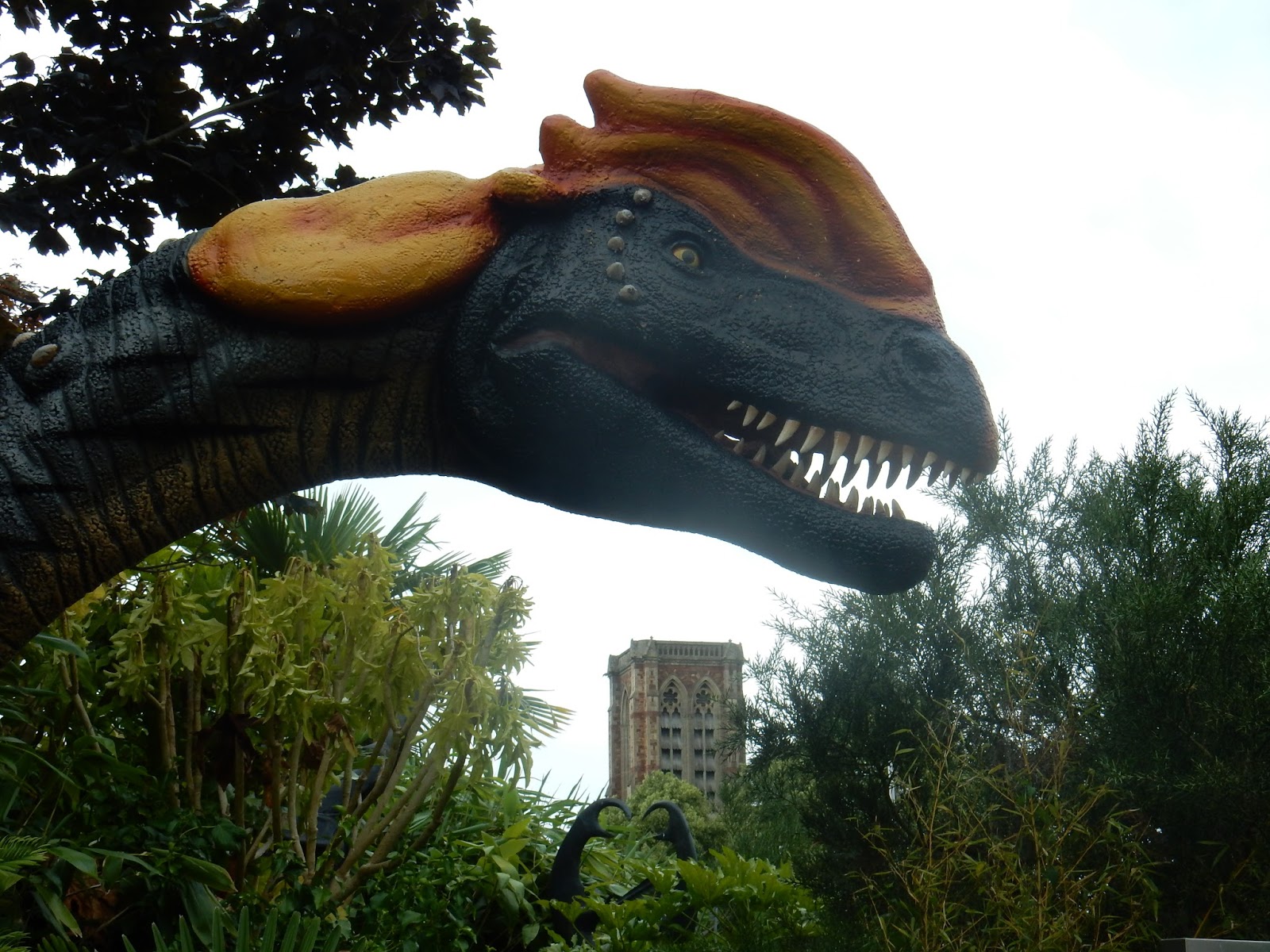
At least the sign makes it clear that there is no evidence for such behavior.

All in all, it could have been worse, but the signage especially could use some improvement.
Naturally, the actual dinosaurs at the zoo were far more interesting. Here are some marbled teal.

Some greater flamingos, pied avocets, and a common redshank.

A white-winged duck.

A Visayan hornbill.

A Victoria crowned pigeon with a crested partridge below.

Funnily, one of the signs signalling the presence of the animatronics was right next to the Sumatran laughing thrush exhibit. I'd like to think that this was intentional.


A red-billed leiothrix.

I was fortunate enough to see this Palawan peacock pheasant displaying to a female. Unfortunately, he wasn't facing me. I don't make a very good female peacock pheasant.

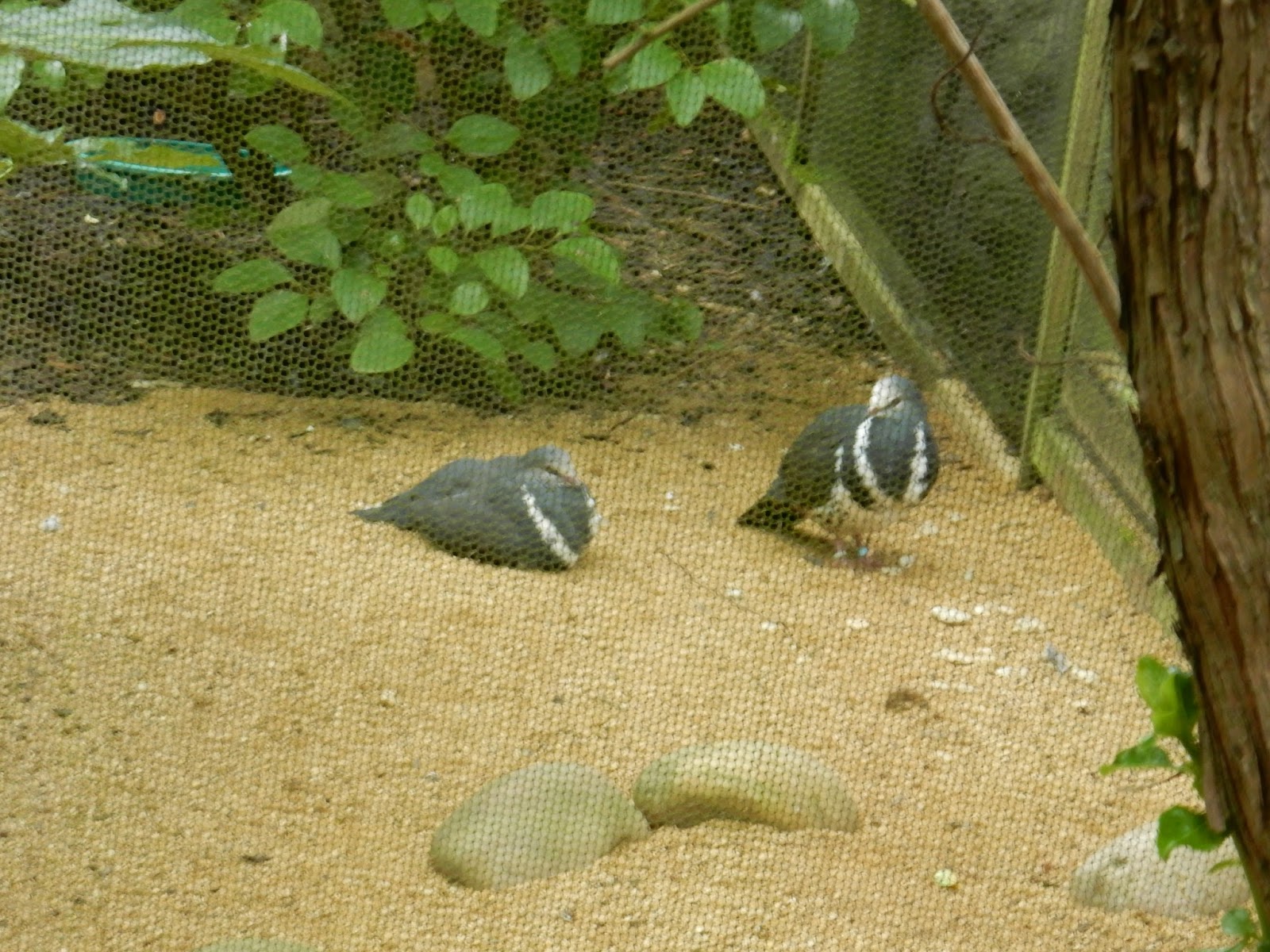
The female, however, didn't appear to be particularly impressed and soon wandered off. Here is the male on his lonesome (with a wonga pigeon in the background).


A European turtle dove getting some shut-eye.

An Inca tern.

A wild Eurasian jackdaw getting rid of a molted feather.

A humorous sign at the exit of the walkthrough lorikeet aviary (which I hadn't been to on previous visits).

The non-avian residents of the zoo gave a good showing as well. The red panda was out and about.

A yellow mongoose.

Actually got an acceptable picture of a Turkish spiny mouse. It was sitting completely still under decent lighting (by nocturnal house standards). I probably won't get a better photo of one than this!

A Henkel's leaf-tailed gecko

A Lord Howe Island stick insect.

Some purple jewel beetles.

A blue tree monitor.

A Pearse's mudskipper. I see mudskippers more often out of the water than in it, so I took the chance to get this shot.

To accompany the animatronics, the gift shop had been stocked with some dinosaur-themed products. At least the title of this one is honest.

Pterosaurs mistaken for dinosaurs again.

There was also this book. Many of its illustrations look awfully familiar...